
Why Most Bloggers Never Make Their First $100
Making money as a blogger in 2026 is much harder than it used to be.
You can’t simply treat your blog as a diary. Treat it like a digital business.
Ad payments aren’t as good as they used to be. Making 500-word articles and filling them with keywords, hoping that Google ranks them, doesn’t work anymore.
Disclosure: Some of the links in this post are affiliate links. This means I may earn a commission if you purchase through them, at no additional cost to you.
I only recommend services I personally use and believe can help beginners start their blogs.
Factors such as AI overviews, content saturation, and social media content have made bloggers change their approach to how they create and monetize content.
Here’s why most bloggers never make their first $100, and what to do differently.
Reason 1: They Monetize Before Building Trust
I remember adding affiliate links to my first 5 posts, convinced someone would click on them just because it exists.
But nobody did. It wasn’t until I finally stopped focusing on links and started focusing on content.
You have to understand that people are much less likely to buy from someone they don’t trust. And trust on a blog takes more than 5 posts. It takes months of building, writing for no one.
And this trust comes through consistent publishing, genuine advice, and experience, not from spamming affiliate links.
Before trying to monetize your audience, focus on building trust. This trust can be earned by giving free knowledge, whether it’s from mistakes, opinions, or experience.
Add affiliate links — just not before you’ve earned the trust to make them worth clicking. And the sooner you do it, the better it is. But affiliate links without trust won’t do anything for you.
Reason 2:They Pick the Wrong Affiliate Programs
I applied to almost every program I could find: Canva, Ubersuggest, Impact, Shopify, Hostinger, and many more. Most rejected. But looking back, I’m glad they did; it was enough to get me to start making honest content instead of writing for money.
They seek high commission rates, popular brands, or what those they admire promote.
But they never ask this question: “Does this fit my content and audience?”
This makes all the difference. If your content isn’t aligned with what you sell, then you won’t be able to sell it.
It’s the same as trying to sell a CD to a deaf person.
Your readers came to your blog for a specific reason, and if what you’re promoting doesn’t connect to that reason, then they’ll just ignore it.
I remember when I started and applied for most programs, I thought it would align with my content. I got rejected by most of them, and nowadays I really see that those programs couldn’t even be written about, at least on this blog.
Make sure that you promote products or services that you genuinely use and trust. And instead of trying to fulfill every post with affiliate links, only place them where they naturally fit the content.
A good program that matches your audience will always outperform ten that don’t.
Reason 3: They Never Create Content Around Their Affiliate Offers
This reason complements the earlier one. Having your own affiliate link is not the same as having the strategy to convert it.
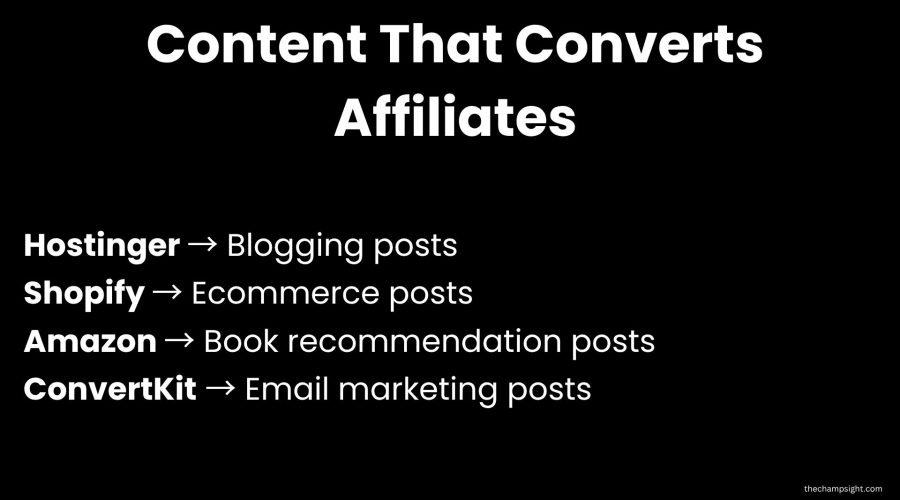
Instead of spamming it on every post, what actually works is creating specific content designed to lead your readers toward those affiliate links naturally.
You can’t force an affiliate link. Instead, talk about a problem, then give a solution. That’s how people sell each other.
Someone trying to start a business? Mention Shopify or any other related platform by giving them a reason to use it.
I used to drop my Hostinger link into random posts and move on. It barely got clicked.
The one time it actually converted was in a post entirely about starting a blog step-by-step — because the content did the selling, not the link itself.
Does anyone want to start blogging? Mention Hostinger, talk about the advantages and why you’re using it.
Never Lie About the Programs You’re Promoting
Even though you want to list all the advantages, don’t be the person who hides the disadvantages from your audience.
Trust must be earned, and the money you might receive shouldn’t be coming from the misery of your audience.
Reason 4: They Rely Only on AdSense
AdSense is the first monetization milestone most bloggers celebrate. And it was also mine.
But they always make the same mistake, including me when I started.
Treating It Like a Primary Income Strategy
AdSense isn’t what it was 10 or 15 years ago.
And I’m talking about this after being rejected 7 times before getting approved. And even then, my first months of ad revenue barely covered a coffee.
AdSense is great because you gain extra motivation. You got approved, you feel like you’re doing something right. And it’s true.
But make sure not to treat it as a primary source of income, especially when starting.
Ready to Start Your Blog?
Launch your blog today with my exclusive 20% discount.
No extra cost to you. I may earn a small commission.
Reason 5: They Never Build an Email List
It’s not the first time I’ve talked about this. Start your email list from the beginning.
Every visitor who leaves your blog without subscribing is gone forever. The chance of him coming back to read another post is very low.
They might have loved your content. Your opinion. The way you write and talk about the topics.
But without an email address, you have no way to bring them back.
I put this off for months, I didn’t care about the software I used, thinking it was too soon to think about it.
But if anyone who visited my website is gone, I have no way of knowing how many people I could’ve brought back if I’d started collecting emails from post one.
Algorithm changes can make your website traffic disappear. But your email list will still be yours.
Campaign Monitor reports that marketers using segmented campaigns have seen increases of up to 760% in email revenue.
I used to think that having 1,000 readers is a lot. But if I had 1,000 subscribers, it would beat 10,000 readers every day.
Affiliate promotions sent to an email list convert at a much higher rate than affiliate links embedded in cold traffic posts.
As stated in Smart Lead analysis, email marketing achieves an average affiliate conversion rate of 3.2%, which significantly outperforms organic social media at 0.9%
Reason 6: They Quit Before Their Blog Has a Chance
It took me close to 6 months and more than 50 posts before I landed my first affiliate commission.
My analytics weren’t anything special, but someone still found my content, trusted my recommendation, and bought through my link.
That doesn’t mean everyone needs six months to make their first dollar. It means my own results took longer than I expected.
Your blog doesn’t need thousands of readers for something to happen. You need to keep building until you give yourself enough opportunities for something to happen.
I seriously considered quitting. I even stopped publishing for 2 months. But that commission changed how I looked at the process.
But bloggers who make it aren’t the ones who never doubt it. It’s the ones who keep coming back to finish the word they were not able to do.
Don’t judge your blog in your first few months.
Reason 7: They Don't Track What's Converting
There are posts that drive more clicks and others that don’t. And most bloggers commit this mistake over and over again. They never check which ones people are actually clicking on.
When I started seeing clicks, I only cared about the number of clicks, not where they came from.
And without that data, you can’t optimize anything.
When I got my first commission, that experience taught me I should have been tracking from day one and now I check monthly.
Check your affiliate dashboards regularly, but don’t obsess over them every day. Monthly is enough when you’re still collecting data.
After seeing the data, create more content like those posts. Use different angles and perspectives, and then build more internal links pointing to them.
A post that consistently generates conversions can become one of your most valuable assets.

Final Thoughts
Your first $100 won’t come from doing everything perfectly.
You’ll fail, and you’ll improve again. But what really changes and makes a difference in your blogging is how consistent you are with your content for it to compound.
Build trust before monetizing. Promote what you actually use. Create content around it. Don’t rely only on AdSense. Stay after month 6. And finally, track what’s converting.
A lot of bloggers never reach their first $100. Not because it’s impossible, but because they stop before they give themselves a real chance.
Subscribe for More Business Insights
You May Also Relate