
How to Stay Consistent Even When You Don't Feel Motivated
Being consistent is one of the hardest challenges when you are trying to build something. You start a project full of energy, motivation, and a sense of power.
But suddenly you don’t feel motivated. Now what?
Motivation doesn’t last forever. At some point in your journey, you will feel distracted or simply not in the mood to work.
And this is where motivation fails you. You decide to stop, not because you don’t believe in your goals.
And not because you think your goals were impossible to achieve, but because you were relying on motivation instead of discipline.
Being able to stay consistent when you don’t feel motivated is what separates those who make it and those who don’t.
Why Motivation Is Unreliable:
- It’s a Feeling, Not a System
Motivation is something you feel at a specific time. When you’re starting, you’ll feel lots of motivation and think you’ll be able to do it forever.
But that’s not true. Some days you may feel tired, in the mood to procrastinate, or even to relax.
Your motivation disappeared. Now you won’t do the things that need to be done to achieve your goal.
You need systems.
A system is a routine that removes the need for motivation. Instead, focus on habits or tools designed to foster consistency, rather than relying on motivation.
Systems reduce decision fatigue and friction. When you make that process part of your routine, consistency becomes much easier to maintain.
If you are building an online business, your system might be publishing or creating content five days per week.
It doesn’t matter whether you feel motivated that day or not, because your system already defines the action.
- Fear of failure
One of the biggest reasons people struggle to stay consistent is the fear of failure.
When you start working toward a goal, there’s always one thought inside your head that maintains the possibility of things not working out.
That uncertainty can make it easier to procrastinate and make you stop completely.
Instead of seeing failure as the end of your journey, start seeing it as a part of the process.
You will fail more than once. Every successful person failed—more than once.
That’s what happens when you’re trying to chase your dreams.
You will improve every time you fail, and eventually you will succeed.
There’s only one type of person who never fails: Those who never try.
When you accept that failure is a natural step toward progress, you’ll feel more relieved, and it becomes easier to keep going.
Being consistent isn’t about avoiding mistakes. It’s about moving forward even when things don’t go as expected.
- It’s unreliable
Many people believe that motivation is the key to success. In reality, motivation is the boost you need to start working on your goals.
You’ll feel eager and passionate to start, and that’s what motivation is for.
But in reality, motivation is only temporary and unreliable.
Some days you feel energized and ready to work, while other days you feel distracted.
I remember when I started my first online business. I was so excited to the point I wouldn’t even leave my house.
The first couple of days, I focused so much that my routine was:
Wake up, eat, work, sleep.
But after a week, I wasn’t feeling motivated, and I didn’t see the results I was expecting.
So I quit. But at what cost? I always imagine what my life would be like if I hadn’t quit that day.
Nowadays, I don’t rely on motivation, I know what my goals are and what I should do to achieve them.
Build Systems Instead of Waiting for Motivation:
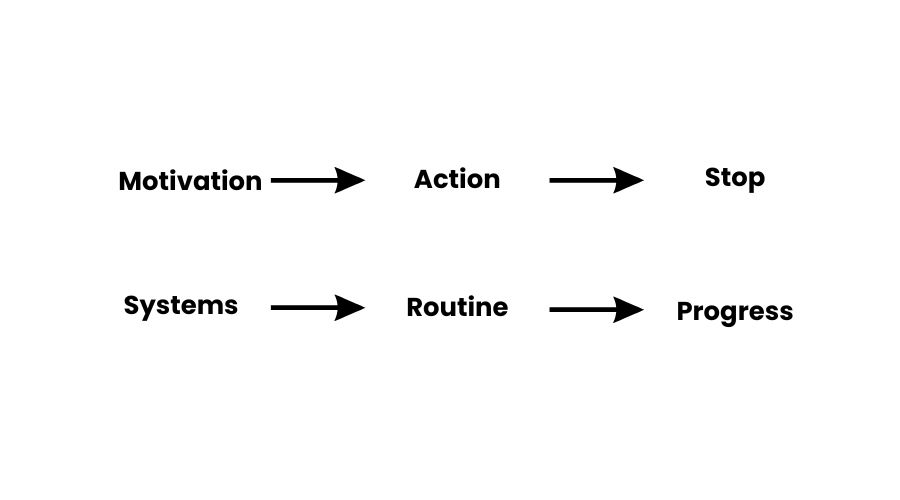
Start building systems so you don’t rely on motivation.
- Schedule your Work
Scheduling your work is one of the main reasons to not be affected by a lack of motivation.
Those days when you’re sick or not motivated enough because you had a bad day.
That’s when your system enters.
Even though a system is made for you, you don’t need motivation.
If you’re physically or mentally weak, your work won’t be as good as it normally would be.
By scheduling your work, you can avoid making weaker work and focus on yourself to be back on track with energy and preparation.
- Make a Routine
Create a routine so your assignments are already in your head without you needing to make extra efforts for them. It becomes natural.
If you determine you’ll do exercise every day at 8 a.m., then do it.
According to James Clear, a routine takes on average 66 days before a new behavior becomes automatic.
If you can keep going for 2 months, then you’ll have a greater chance of implementing it in your routine.
- Start Small to Reduce Resistance
One of the biggest reasons people struggle to stay consistent is their expectations.
Sometimes people set expectations so high that it’s almost impossible to achieve them in the first few months.
When a task feels overwhelming, it’s much easier to avoid it.
Instead of focusing on completing a large amount of work, start with small actions and tasks.
If you plan to schedule content for your business for a month, start by making content for a week or two.
When you lower the resistance by starting lower, it becomes much easier to continue once you begin.
If you want more insights about productivity, mindset and building an online business, consider joining my newsletter.
Start Even When You Don’t Feel Motivated:
Don’t wait for the perfect moment to start. There isn’t one.
You don’t need to feel motivated, inspired, or even fully prepared. Because you won’t be.
When people avoid this problem so much, this moment rarely arrives.
Consistency often means working even when you don’t want to. And if you only work when motivation appears, then your results will always depend on your emotions.
Staying consistent is especially important when you are building something long-term, for example, growing a blog.
Progress won’t show up because you started fully capable.
It comes from showing up consistently, even when work feels uncomfortable.
Small Wins:
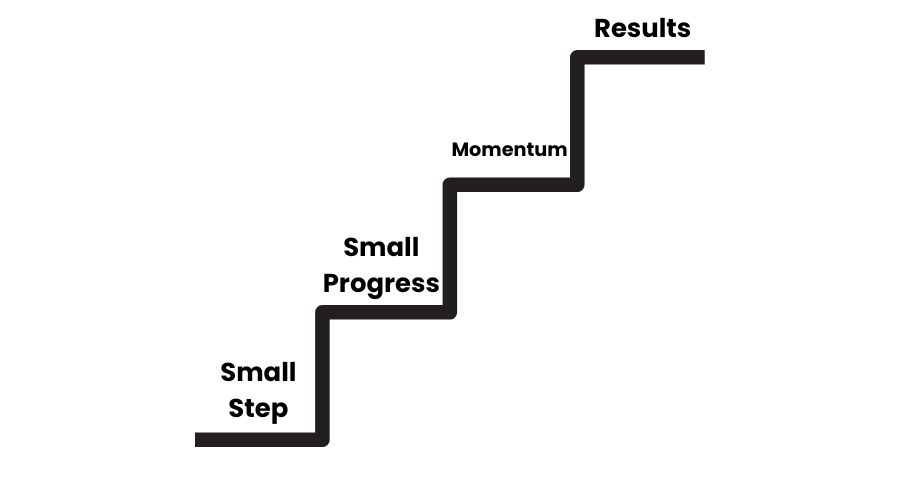
When people start working toward a goal, they often focus only on the main and final result.
They want to see immediate success, fast progress, and big achievements.
I was like that. And most of the time, I ended up quitting.
Figuring out why most people quit can help you avoid their mistakes.
When you decide to focus on small wins, you’ll see progress much faster.
Decide what the steps should be for you to achieve your main goal, whether it’s writing, creating a product or a service, or even starting a blog.
Each small win builds momentum. Over time, every small win you achieve becomes a meaningful result through compounding.
When you start appreciating your small wins, your journey becomes easier to sustain.
Remove Distractions:
Distractions are the biggest obstacle to staying consistent.
Even when you decide to work, it becomes very easy to lose focus because of social media, notifications, and other interruptions.
A few minutes of distraction can quickly turn into an hour.
If you want to stay consistent, it’s important to create an environment where you won’t be distracted by anything.
When you decide to work, turn off your notifications. You should only have what you really need to work, whether it’s a laptop, your phone, or even a journal.
By removing your distractions from your environment, you stay committed to the work you planned on doing.
Reduce Friction:
Sometimes the hardest part is getting started. When a task feels complicated, it becomes easy to postpone it for later.
Reducing friction means making it easier for you to begin working.
Start by preparing what you’ll need first.
If you are planning on creating a post for your business social media, then you start by opening your editing software.
If you are trying to research keywords, start by opening it on the web, and if you need a paper, make sure to have it before you decide to work.
When you remove the process of “starting”, everything becomes easier because you have removed one of the biggest barriers.
The easier it is for you to begin, the more likely you are to take action regularly.
Final Thoughts:
Staying consistent is not about feeling motivated every single day. Motivation can help you start, and as I was saying, it’s the boost you need to start.
But it rarely lasts long enough to carry you through your whole journey. Real progress will come from showing up every time, even when the excitement fades away.
By building systems, starting small, and removing distractions, you make consistency much easier to maintain.
These small adjustments create habits that will help you continue moving forward, even when you’re tired or unmotivated.
In the long run, discipline will always outperform motivation. The people who succeed are not necessarily the most talented or the most motivated.
They are the ones who keep working no matter the circumstances.
Get Weekly Insights on Mindset, Business and Productivity
Related Posts





I Lost $50 to a Scam. What It Taught Me That No Course Ever Could