
Passion vs Talent: How to Choose Your Path
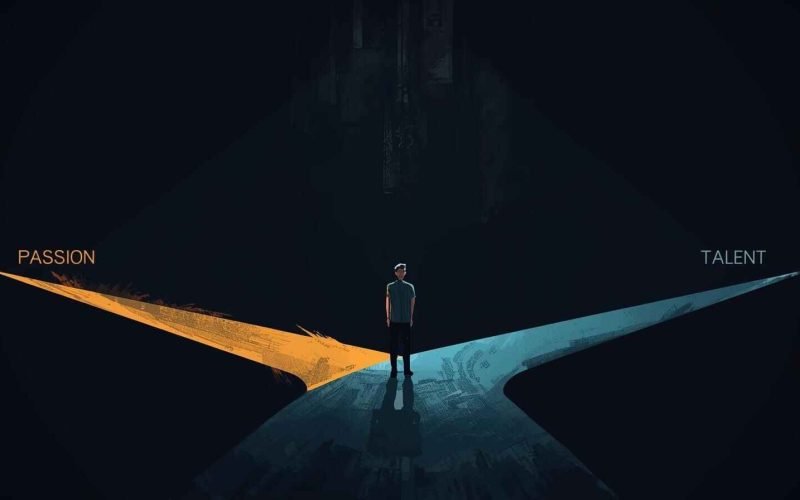
Choosing between your passion and your talent is one of the most challenging decisions you can make.
It’s not just a simple question. It’s a life-changing one.
Should you go for what you love even if you’re not as good as your competition? Or should you just build your career on what you are very good at?
In my honest opinion, I don’t think there is a “right answer”.
It’s a decision.
What if You Pursue Your Passion?
If you love what you do but you are not as good as others, then you may encounter two options: Give up or keep going, even if it takes longer to see progress.
There’s a famous quote that says, “If you do what you love, you’ll never work a day in your life.”
I don’t completely agree. I think it’s easier because you love doing what you are doing, and you will be more consistent.
On the other hand, if you lack talent, you will face tremendous confrontations, resistance, criticism, and comparison.
You will have to work twice as hard to keep up. I always wanted to be a professional athlete, but I didn’t have the skills that were needed for that specific sport.
I loved practicing and playing, but I didn’t have the physical traits required for that position.
I wasn’t as tall, and when you are playing on a higher level, a large number of players will want your spot.
People always looked at me like I wasn’t good enough, but in reality, I was. At least at that time.
But as time was passing and I was becoming older, my competition was getting bigger and better.
No matter how hard I trained, there was always someone who had better genetics.
I don’t have any regrets. Now that I am much older, I realize that I, in fact, didn’t have the skills, and the most important thing.
The Mindset.
I’m not saying you should give up as I did. I also mentioned it in one of my posts.
I just needed to keep progressing and not give up, but I was young and decided to quit on my dream.
I wasn’t ready to put in the work every day to overcome those disadvantages.
That's When Passion Can Become Dangerous.
If you truly want to choose your passion, you must realize that you have to work harder every day.
- You will fail, over and over again. And you may encounter the feeling of quitting.
- Progress will be slow.
- Quitting will feel tempting.
When you face that feeling. Make sure not to give up as I did.
Remember this famous quote: “Hard work beats talent when talent doesn’t work hard.”
When you are passionate about something, you will push through it all, the depression, the defeats, the tiredness, and you will realize that when you push yourself to the limits, you will improve.
And that’s the difference between choosing passion over talent.
If This Resonates:
What if You Choose to Pursue What You Are Good At?
As I was saying, the main reason someone chooses passion over talent is the “hunger”, the need to improve and to be better at it.
When you have talent, you think that everything is going to be as easy as it once was.
And when you face those bad times, you have a higher chance of giving up, because you don’t have the same “will” to succeed as the person who had passion.
- Results come faster because you are naturally good at it.
- Opportunities appear sooner
It will give you a great advantage over others who “only” have the passion.
But it’s not just an advantage, when you don’t love what you do, you may feel empty over time, unfulfilled because you are just doing it because you are good at it.
It gives you leverage over others, but without that passion, you won’t push yourself to the limits, you will never do extraordinary things unless you are motivated by passion.
Once you feel like you’ve done enough, you won’t do anything more.
Consequences of Being Talented
Many people believe that being talented is a gift, and even though that’s not entirely wrong, talent also has its downsides.
Early success can create false confidence. When you have more ease in the beginning, it can lead to consequences like:
- Laziness:
You become lazier because you believe whatever you’re good at will always be easy, even though that’s a lie.
Talent can only take you so far.
- Resistant to criticism:
It means that you will dismiss any feedback without thinking about whether it makes sense. If you are already good, why would you change?
- Avoiding discomfort:
People have to lose and suffer to win. You can’t win forever, at least at the beginning. When you think you are the best, it may cause you to avoid discomfort.
Over time, the difficulty is going to be much harder, and when you don’t decide to work hard all the time, talent won’t make you succeed forever. You need practice.
When you learn how to love what you are good at, that’s when you change and become a threat to your competition.
The feeling of not wanting to work more is gone because you love doing that, and when you love doing it, you don’t feel like the work is done.
You know there’s room for improvement, and it won’t cost much to make even more progress.
Don’t mistake talent for skill. Talent comes from birth; you were born with the capacity to learn faster.
Skill is developed and acquired through consistent hard work and, most importantly, practice.
Final Verdict
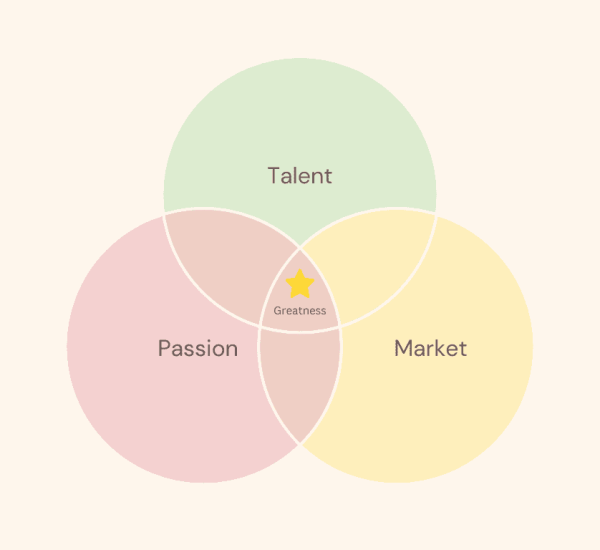
The truth is, if you want to be great, you need both.
I remember this quote from Hiruma: “Talent can take you so far. Hard work can take you anywhere.”
The perfect example is Cristiano Ronaldo. He trains like he never won and performs like he never lost.
Look at him, 40 years old and still playing, doing what he loves, because he loves doing it.
But in reality, those who say he doesn’t have a talent are lying.
There are a lot of professionals, even in other sports, who are hard workers, but they never reached the TOP, and that’s because they don’t have the same talent.
You need to have talent and to be passionate about it. But you may not love doing what you are good at, you can be good at what you love if you push further.
That’s the biggest challenge: deciding to push so hard that you overcome those obstacles.
Maybe you love drawing, but if you are not good at it, you can always train. When you are passionate about something, you won’t feel like you have to do it, but you will want to do it.
In one of my previous posts, I talked about changing your mindset from “Have To” to “Want To”.
Even though that was about time management, the same perspective can be applied here. If you decide to do what you’re good at, learn to love it.
You may not love the specific concept, but you can grow to appreciate what it leads to.
Focus on the opportunities it may create, where it can take you, and how your life may change because of that.
Sometimes, focusing on the results can be more effective than focusing on the process.
Choose based on how willing you are to suffer. Because you will.
Are you willing to do the work when motivation isn’t there?
That’s what transforms good into great.
You May Also Relate: