How to Build a Personal Brand From Scratch
Disclosure: Some of the links in this post are affiliate links. This means I may earn a commission if you purchase through them, at no additional cost to you.
Building a personal brand as soon as you can is the most important way to stand out.
Whether you’re just starting as a freelancer, starting a business, or even looking for a job.
A personal brand helps you build trust, visibility, and authority in your field.
In a world where everyone is online, a personal brand is what makes people remember you.
But a strong personal brand isn’t built overnight.
Before learning how to build a personal brand from scratch, it’s important to know what a personal brand is and why it matters.
What Is a Personal Brand
A personal brand is how the world perceives you.
It’s a combination of your experience, skills, and character that describes how you introduce yourself to the world.
The main goal of a personal brand is to shape how others see you, in a way that you want them to see.
You can do that by highlighting your unique expertise, portfolio, or even values.
When I started The Champ Sight, I didn’t realize I was already building my own personal brand.
But as I published more posts, I was constantly shaping how other people perceived me.
By doing that, you build credibility with others, which may provide opportunities for you to accomplish your goals.
You don’t need to be a business owner to build a personal brand.
In fact, this is where most people get it wrong.
Whether you’re looking for career growth, clients, or even your first job, you should be building your personal brand as quickly as possible.
Why Building a Personal Brand Matters
A strong personal brand isn’t random. You need to know a few concepts that shape how people see you.
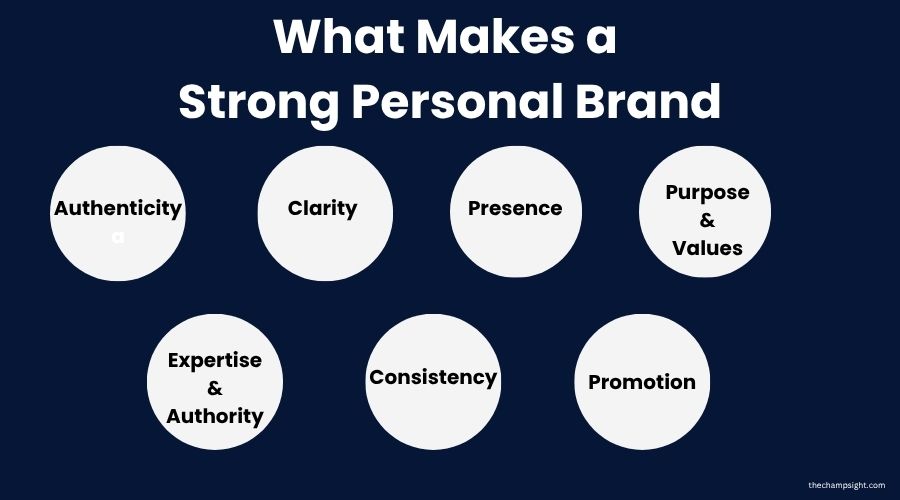
You don’t need to master all of these at once, it’s something that will happen over time.
But it is important to keep them in mind to help you build your own personal brand in a more consistent way.
Most people wait until they need something. It doesn’t matter if it’s a job or a client.
People still wait to finally present themselves to the world.
But by then it’s already too late.
To build a personal brand, you need time. It’s like everything else, it takes time.
As a matter of fact, it shouldn’t be built when you need it, because if you do that, when opportunities arrive, you’ll be late.
Here’s why it matters more than ever, mainly in 2026.
People Buy From People They Trust.
Before anyone ever hires you, buys anything from you, or even works with you, they’ll search you up.
They will check your social media, personal, and business profiles, and they will analyze your content, along with your experience and skills.
If they can’t find anything, they move on.
Don’t expect people to go deep to know you.
Your profiles must indicate who you are, so it’s easier for them to find you.
A strong personal brand gives you exactly that. A reason for people to trust you before they ever speak to you.
The Internet is Overcrowded
There are millions of people looking for your job, clients, and the same opportunities that you’re looking for.
They have the same skills and offer the same services as you.
But your skill isn’t the most important factor.
The ones who stand out are those who built a brand around their niche.
That’s what makes you different from everyone else who does the same thing.
It Opens Doors You Didn’t Know Existed.
When I was in college, and I was required to have an internship, a personal brand was what saved me.
I was posting and connecting with other people during those years.
And when I needed an internship, I sent a message to all of them to see if they had a spot.
Some of them didn’t, but one of them got me one.
The reason is that he already knew me. We didn’t talk every day, but he knew I existed.
When you post content and build your own presence online, it’ll be a time when opportunities will reach you.
None of that happens if you’re invisible. Clients reach out, and collaborations happen.
That’s the beauty of social media. If someone likes your content, they will share it with their connections.
How to Build a Personal Brand From Scratch
Building a personal brand doesn’t require a large following or even a big budget to advertise.
It requires consistency and clarity on what you post for people who watch it to see what you’re focusing on.
Step 1: How to Define Your Brand Identity
Before you create anything, whether it’s your LinkedIn or other social media profiles, you need to know your interests, strengths, and who you are.
Start by asking yourself:
What makes my perspective different from the millions of people talking about the same topic?
What do I want to be known for? What am I specialized in?
Your brand identity is the foundation of your personal brand.
Everything else is built on. Take your time before you think of skipping this step.
If you make a decision that you might regret, your content may feel inconsistent and confusing.
Write down your core topic, your target audience, and finally, your perspective.
Step 2: Define What You Talk About
You don’t need to cover every topic in your niche.
If you’re specializing in running ads for small to medium businesses, then approach those people with your content.
Or if you’re promoting SaaS to local businesses for them to be present online. It doesn’t matter.
As long as it is specific enough to attract your target audience and also has enough to create content for a long period of time.
When you’re defining what you will talk about, don’t forget to set goals.
This will help you keep track of the later run, so you can remember the reason why you started.
Step 3: Create a Consistent Visual Identity
People recognize brands before they read a single word.
It could be from your logo, colors, or even aesthetic. All of those concepts must be consistent across every platform you use.
I never understood the importance of colors because, for me, it looked cliché.
But once you go to someone’s profile that isn’t constant, you’ll notice the difference.
You’ll feel like it’s more than one person because you’re seeing 10 colors every time you go on their profile.
Be sure to pick 2 or 3 colors that represent what you’re trying to transmit.
Step 4: Start Creating Content That Reflects Your Brand
This is where most people overthink and quit before they even start.
You don’t need perfect content, you need consistency and honest perspectives.
Build Case Studies
Document your own journey. Share what you’re doing, what is working for you, and what’s not.
People love real stories more than polished advice.
If you made a mistake that cost you a client or a job, share it for others to learn from you.
People will start connecting with you and your values.
Post Results
Share your wins, even the small ones.
Imagine if you’re managing some local business finances.
After a couple of weeks or months, you managed to find an anomaly that is costing the business some money.
Post the results on your profile. Other businesses will see and eventually connect with you.
The algorithm is not there by chance. It’s showing your content to your target audience.
Who do you think businesses will trust more?
Someone who has 10 successful transformations and positive reviews, or someone who doesn’t even post?
Like I said earlier. People buy from those they trust.
Make sure you’re visible, and when people search for a service or someone, they’ll see you as a valuable option.
Step 5: Build an Email List From The Start
The algorithm can change overnight, your social media can be deactivated, hacked, or even disappear.
Your email list is the only audience you truly own.
Start building it from day one, even if you have zero traffic.
Offer free tips, create a lead magnet, or even newsletters on your personal website.
If you’re using your social media, create content and find a problem with a unique solution.
Add your lead magnet link to the bottom of the post for people to search for more information.
Every subscriber is someone who trusts you. It’s worth more having 100 subscribers than 10,000 followers.
Those 100 subscribers are your audience, but those 10,000 followers are borrowed.
Once the algorithm changes, maybe 1% of your followers may actually see your content.
If you’re serious about building a personal brand, having your own personal website is a huge advantage.
It’s a great way for people to see what other projects you’ve worked on.Even though you have your resume, a personal website lets you go deeper into the content.
Step 6: Monetization Strategy
A personal brand opens multiple paths for you to monetize your content.
For the last couple of years, I’ve been seeing business owners actually appearing in their business social media profiles.
It gives more trust to the business because people can see a face.
If they stay consistent, they may even get more followers than their own business.
You may even get the chance to promote your own events, such as lectures or even meetings.
And that’s because people trust you and they see what you built.
A great example is the founder of Gym Shark, Ben Francis.
From the start, he documented the brand’s growth on his social media.
Look at it now, its value exceeds more than $ 1,45 billion.
You don’t need to monetize it from day one. And I don’t recommend it.
Build your brand first. The monetization follows naturally based on the quality of your content.
Provide trust and be trusted before trying to make people spend their money.
Step 7: Stay Consistent
This is where the majority of people fail.
Building a personal brand feels exciting when you’re starting.
You start thinking of all the possibilities and results you may get from it.
But after some time, you start to feel the excitement fading.
Not because you’re tired or because you don’t want to do it anymore.
But because you’re not seeing the results you’ve expected.
But if it were easy, everyone would do it, and everyone would succeed.
Those who can be consistent are the ones who succeed.
When you post all days of the month, you have more chances of having your content shown to other people.
Keep publishing and creating content for a year. You’ll see results.
Really commit to it, maintain your productivity and schedule, and don’t lose it for anything.
Want more tips like these? Get weekly insights straight to your inbox. No spam.
Mistakes To Avoid When Building a Personal Brand
- Starting With Multiple Niches:
The biggest mistake beginners make is trying to talk about everything.
Remember that “If you try to talk to someone, you end up talking to no one.”
Pick one niche and set your target audience. Commit to it to the point where giving up is no longer an option.
After you grow and finally build authority, then you can think of expanding.
One of the bigger examples is Logan Paul.
He started as a content creator. He built a massive audience before expanding to where he is now.
He didn’t start by focusing on boxing or on his energy drinks. He became one of the best in his field.
- Copying Someone Else’s Brand
You can feel inspired by others. But don’t copy their style or even content direction.
You’ll always be behind, not because the content isn’t good, but because it isn’t you.
Focus on approaching your content with your experiences, your perspective, and your stories.
Those are the things nobody else can ever replicate.
People must find a reason to follow and trust you.
Give them that reason by being you, not by being a copy of someone else’s business.
- Disappearing For Weeks
People forget quickly. After a week, they may even forget why they followed you.
Not being consistent kills personal brands faster than bad content.
If you can’t manage to post 5 times per week, then it’s better to post 2 or 3 times per week and schedule the rest.
Build momentum by posting consistently instead of randomly posting and vanishing for weeks.
After you grow, you can expand.
How Long Does It Take to Grow a Personal Brand
My honest answer is longer than you think.
There isn’t a specific time for your personal brand to grow.
It all depends on your niche, the quality of your content, your consistency, and time.
You could grow in 6 months, but it may also take 2 years.
Don’t focus on “How much time do I need to hold on?”
Because if you think like that, there’s a big chance of not succeeding.
Building a personal brand takes time. Don’t expect it to be a 30-day journey.
It’s built over time, by building trust, authority, momentum, and your audience.
Keep creating valuable content and finding solutions to what people struggle with.
Eventually, your time will come. Enjoy the journey and love what you do.
Final Thoughts
Your personal brand is always being built, whether you’re intentional about it or not.
Every post you publish on your profiles, every comment, and every share you make.
That’s how people perceive you.
It’s not only in the business world. It’s already happening in your personal life.
The question isn’t if you have a personal brand or not. The question is if you’re building it on purpose.
The best time to start is today. It won’t feel like it’s working for some time.
But it actually is.
One day, you’ll look back and realize that if you didn’t make all the sacrifices to stay consistent, it wouldn’t have happened.
Get Weekly Insights on Mindset, Business and Productivity
You May Also Resonate